

June 2, 2026
How Long Does Ceramic Coating Take to Cure?
Ceramic coating takes 2 to 3 weeks to cure fully, though the surface is dry to the touch within 1 to 3 hours and safe to drive after 24 to 48 hours. Hydrophobic protection builds to roughly 90% within 72 hours. Full chemical resistance and maximum hardness develop over the following 14 to 30 days.
Key Takeaways
- Ceramic coating is dry to the touch in 1 to 3 hours and water-safe after 24 to 48 hours.
- Hydrophobic protection reaches approximately 90% within 72 hours, before full hardness arrives.
- Full cure takes 2 to 3 weeks; professional-grade, high-hardness systems can specify up to 21 days for full protective strength.
- Most manufacturers recommend waiting 7 to 14 days before a traditional hand wash with pH-neutral soap.
- Temperature, humidity, and product formula can shift cure time by several days in either direction.
How Long Does Ceramic Coating Take to Cure?
Ceramic coating takes 2 to 3 weeks to fully cure, with some professional-grade formulas requiring up to 30 days. The curing process follows three distinct milestones: an initial skin forms in 1 to 3 hours, water-safe hardness develops in 24 to 48 hours, and full chemical resistance builds over 14 to 30 days.
The coating chemically bonds to the vehicle’s clear coat during this period. That bond doesn’t complete at the dry-to-touch stage; it continues to strengthen for weeks after application. Hydrophobic properties reach approximately 90% within 72 hours, but peak scratch resistance and chemical hardness require the full cure window.
| Milestone | Typical Timeframe | What Happens |
|---|---|---|
| Dry to the Touch | 1 to 3 Hours | Initial skin forms on the surface. |
| Initial Cure Stage | 24 to 48 Hours | Coating becomes water-safe; driving is generally safe. |
| Hydrophobic Protection | 72 Hours | Water-beading effect reaches approximately 90%. |
| Full Cure Stage | 2 to 3 Weeks | Full hardness and chemical resistance are achieved. |
What is the difference between an initial cure and a full cure?
Initial cure is solvent evaporation, which finishes in 24 to 48 hours; full cure is complete chemical hardness, which takes 2 to 3 weeks.
During initial cure, solvent molecules escape the coating layer, leaving a stable film that can handle light moisture. The surface looks finished at this point, but chemical resistance is still low. Full cure is a slower process because the silica network within the coating continues cross-linking and hardening for weeks. The silica cross-linking process is why surface prep quality, including a proper IPA wipedown before application, directly affects how evenly and completely the network forms across each panel.
The distinction matters because a coating can reach water resistance early in the initial cure stage while still needing two more weeks before its scratch and chemical resistance reach rated performance. That is why strict aftercare applies for 14 days or more after application, even when the car looks and drives normally.
When Can You Drive and Wash a Ceramic-Coated Car?
A ceramic-coated car is safe to drive after 24 to 48 hours and safe for a traditional hand wash after 7 to 14 days, depending on the coating system applied.
Brief movement within the shop bay is possible within 1 to 3 hours, once the initial skin has formed. Normal road exposure becomes reasonable after the 48-hour mark. For washing, most manufacturers require at least 7 days before any soap-based wash, and professional-grade systems often advise 2 weeks. During the waiting period, spot cleaning with a microfiber towel and a ceramic-safe detail spray is the safest approach. When washing resumes, pH-neutral soap is the correct choice, as alkaline or acidic cleaners can attack the coating’s surface chemistry even after full cure.
| Wash Type | Timing | Risk Level |
|---|---|---|
| Spot Cleaning (microfiber + detail spray) | After Initial Cure (48 hrs) | Low |
| Traditional Hand Wash (pH-neutral soap) | 7 Days or Later | Moderate if done early |
| Professional-Grade System: First Full Wash | 2 Weeks | Lowest risk |
| Automatic Car Wash | Avoid entirely during the cure | High |
What Affects Ceramic Coating Cure Time?
Ambient temperature, humidity, coating formula, and application thickness are the four primary variables that affect ceramic coating cure time.
Higher humidity slows solvent evaporation and extends the initial cure stage. Lower temperatures reduce the rate of chemical cross-linking during full cure. Warm, dry conditions (typically above 60°F with humidity below 70%) produce the fastest and most consistent results. Professional shops use infrared heat lamps to maintain those conditions regardless of ambient temperature, which gives vehicles a more predictable cure window and exit time.
The manufacturer’s formula also creates significant variation. Professional coating systems use different chemical compositions, so cured windows differ even when applied under identical conditions. Professional-grade, high-hardness systems specify up to 21 days for full protective strength, while lighter-tier formulas typically cure in around 7 days, and that difference in formula is also one of the reasons ceramic coating cost varies by system. Some systems reach full hardness faster but still require a 2-week wait before washing, because wash-safe timing and hardness timing are separate milestones. The product data sheet for the specific system applied is always the authoritative source.
What Should You Avoid During the First 2 Weeks?
Harsh chemicals, automatic car washes, and prolonged water exposure are the three highest-risk exposures during the first 14 days of ceramic coating cure.
Alkaline and acidic cleaners should stay off the surface entirely until fully cured. Automatic car washes with brushes or rollers can scratch a coating that hasn’t reached the rated hardness. Water spots form most easily in the first 24 to 48 hours, so minimize standing water during that window. Bird droppings and tree sap require immediate removal, as both etch into soft coatings within hours.
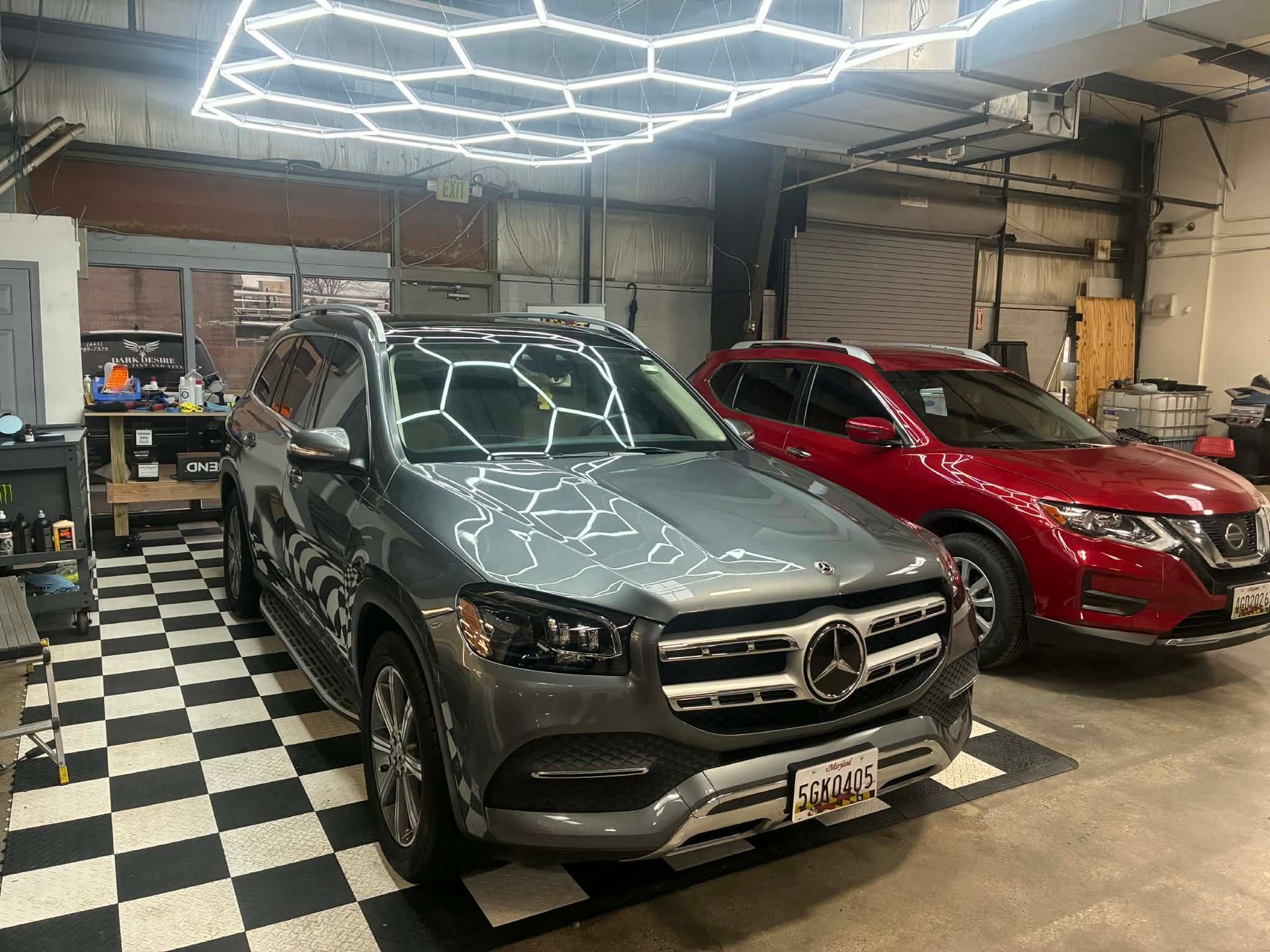
What the Curing Stage Looks Like in Practice
Cure time is not a single number. It is a window with several distinct checkpoints, and the variables that shift it most are ambient temperature, humidity level, and the specific coating formula applied.
Pennsylvania winters present one of the more challenging environments for ceramic coating cure. Temperatures below 50°F slow solvent evaporation and extend the initial cure stage by 12 to 24 hours, and full cure can push past the standard 3-week window when daytime temperatures stay consistently low. Summer applications in Hanover typically cure faster, with the 72-hour hydrophobic milestone often arriving closer to 48 hours in warm, low-humidity conditions.
The most common mistake during the cure window is washing too early. Owners who wash within the first 7 days, even with pH-neutral soap, risk introducing water spots and uneven hydrophobic performance before the silica network has finished cross-linking. Waiting the full 14 days before the first hand wash is the single most controllable variable in getting consistent long-term results.
What To Do Next
Understanding cure time is the first step. Knowing which coating tier best fits your vehicle, driving habits, and budget is the next step. See the full range of ceramic coating packages Maryland Clean Rides offers in Hanover, including what each tier covers and what to expect on the day of ceramic coating installation in Hanover, PA.
Last updated: June 2026
Written by the Maryland Clean Rides Team | Hanover, PA | Serving York County and Adams County | 165 McAllister St, Hanover, PA 17331 | (443) 300-6356